35mm, also sold as 135 film, is the format we develop more of than any other. Color (C-41), black & white, and slide (E-6) rolls are developed and scanned in-house, uploaded to your free web gallery, and your negatives are mailed back.
Start Your 35mm Order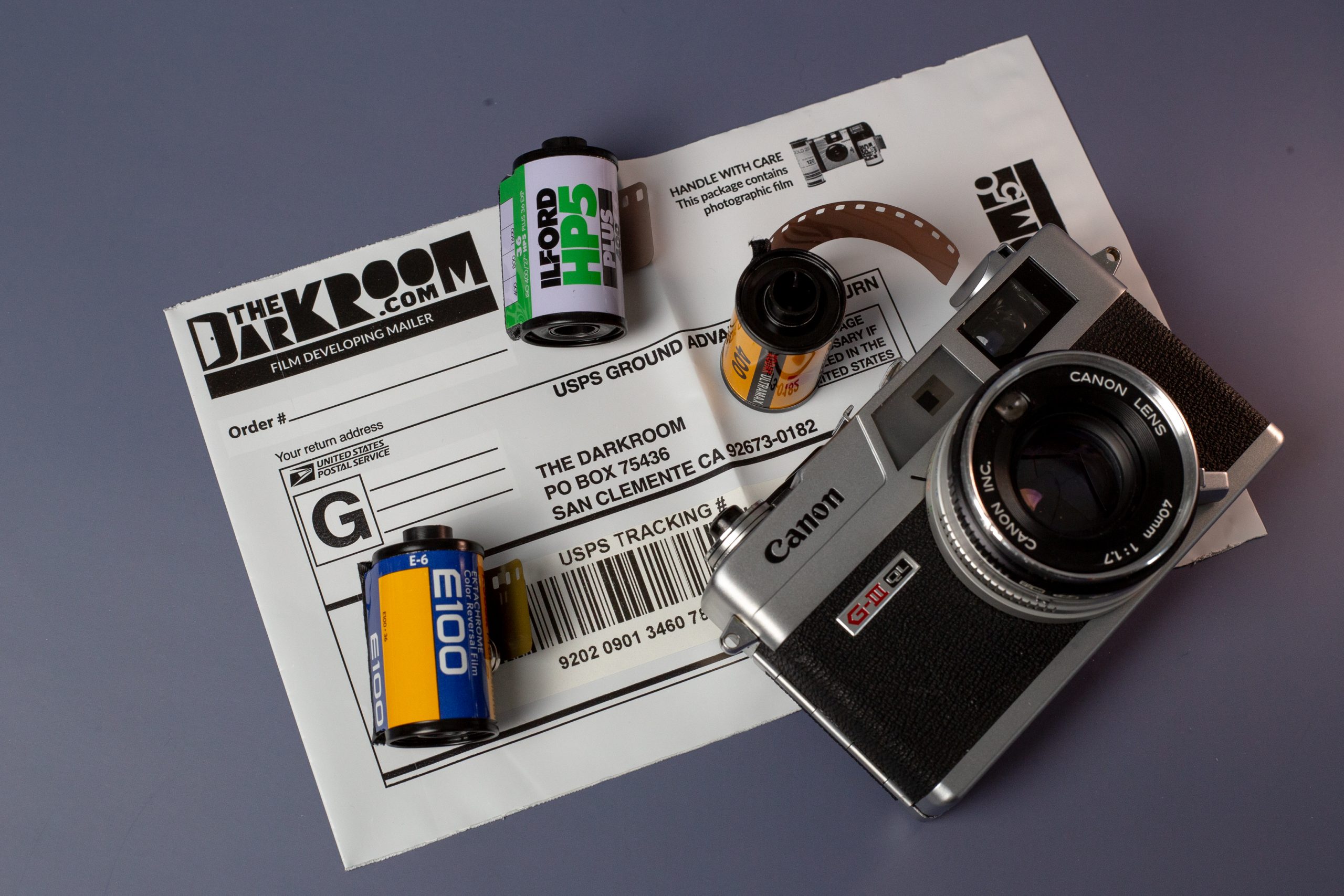 We processC-41 · B&W · E-6
Quality developingSince 1976
Most film cameras made since the 1930s take 35mm. Here’s how to be sure that’s what you’re holding.
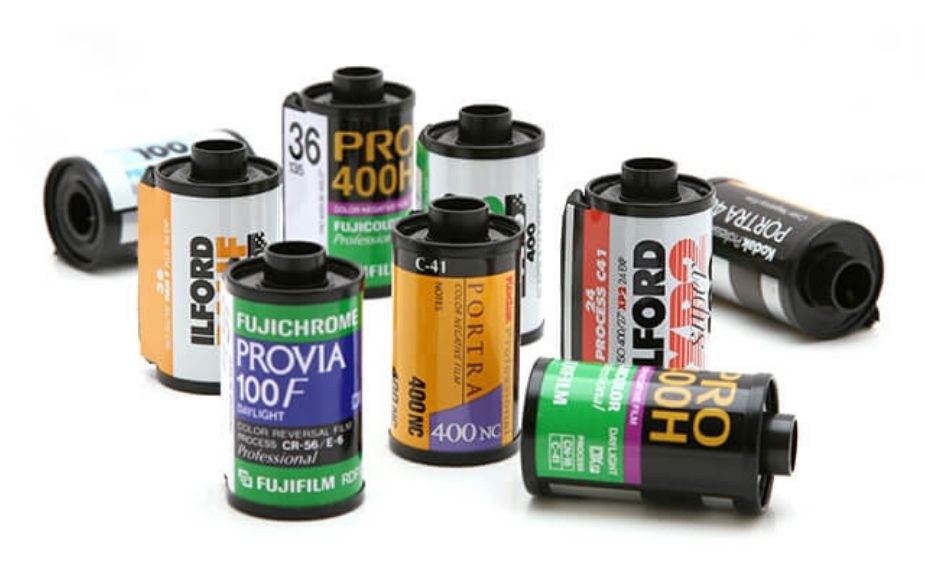
135 film is the film we run most, on dedicated C-41 machines and our dip-and-dunk line for everything else. Here’s what we process, what you get back, and what to check before you mail it.
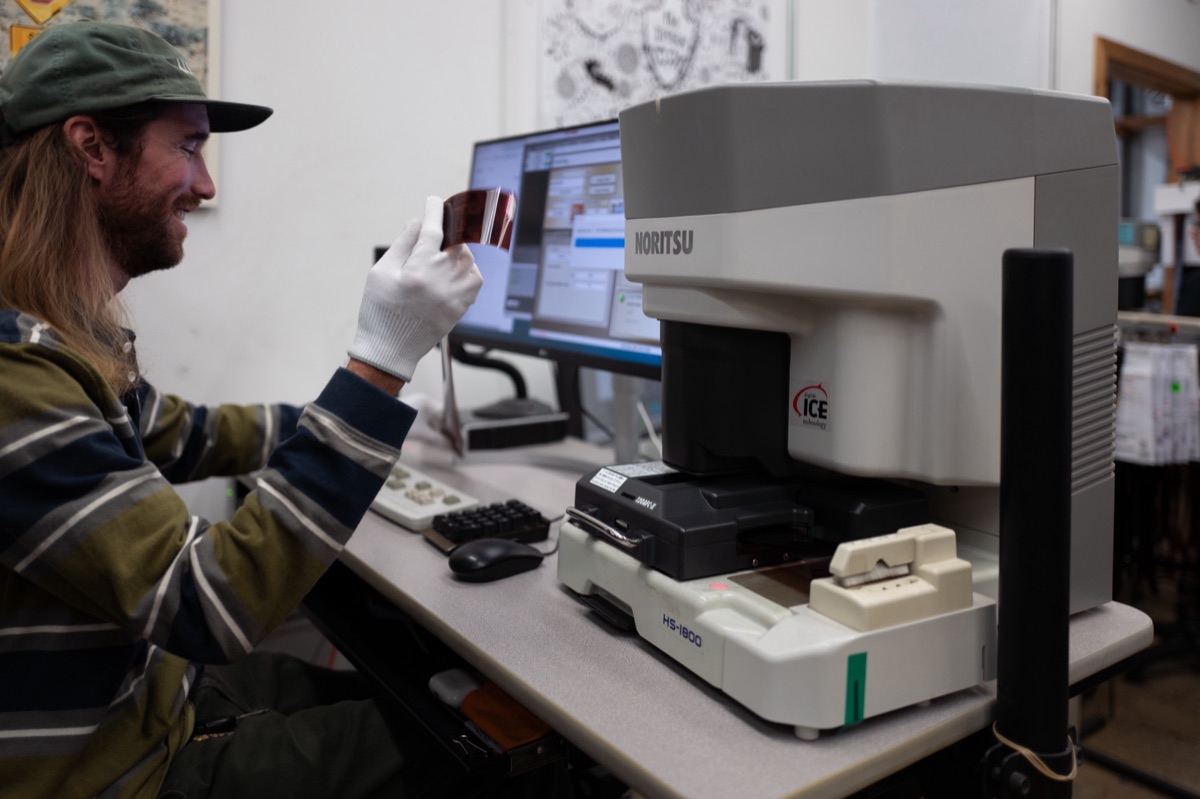

One price per roll of 135 film, with the add-ons you choose at checkout. No hidden fees.
| Add-ons per roll | |
|---|---|
| Enhanced scans Our recommended size | + $2 |
| Super scans Largest files, best for enlargements | + $6 |
| Color 4×6 prints | + $10 per set |
| Color 5×7 prints | + $18 per set |
| True black & white 4×6 prints On real silver gelatin paper | + $20 per set |
| Slide film (E-6) | + $6 |
| Half-frame format Scanned 1-up or 2-up | + $6 |
| Panoramic format | + $10 |
| Push or pull processing | + $3 |
| Cross processing | + $3 |
| Redscale film | + $3 |
| Do not cut negatives | + $3 |
| Other options | |
| Develop only, no scans Add $6 for E-6, $3 for push, pull or cross processing | $11 |
| E-6 slide mounting Develop-only orders, 35mm only | + $15 |
| Disposable camera Develop + Standard scans, any brand | $17 |
| Inbound shipping Printable label or free postage-paid mailer | Free |
| Return shipping Unlimited rolls per order | $6.95 |
Pick 35mm as your film type, choose your scan size and any prints, and check out. One order can hold as many rolls as you have, and disposable cameras can ride along.
Print your free shipping label, or request a postage-paid mailer and we’ll send one to you. Drop the cassettes in as they are and send it.
We email you the moment your scans land in your online gallery, usually 2–4 days after your film arrives. Share, download, or order prints. Your negatives and any prints follow in the mail.
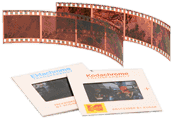
135 film is 35mm film. They’re two names for the same thing: 35mm is the width of the film strip, and 135 is the catalog number Kodak gave the daylight-loading cassette in 1934, and it’s still printed on the box. If your film says 135, 35mm, or 135-36, it’s the film this page is about, and we develop it.
Most still take 35mm color film at the counter, but the film is sent out to a third-party lab, turnaround is measured in weeks, and in many cases your negatives are not returned. Black & white and slide film are increasingly turned away altogether. We develop all three in our own lab in California, scans are online in a few days, and your negatives always come back to you.
Yes. We develop 135 film that has been sitting in cameras and drawers for decades. Expect some color shift, fading, or heavier grain, especially if the film was stored somewhere warm. Two exceptions. Color film marked C-22 or Kodacolor-X (made before 1973) uses a chemistry no longer available; we can process it as black & white instead. Kodachrome, whose chemistry ended in 2010, Triple Print and pre-1977 E-4 Ektachrome we cannot process at all.
Yes, and it’s the same $14 as color. True black & white films like Ilford HP5, Kodak Tri-X and T-Max are developed in dedicated B&W chemistry on our dip-and-dunk line. Chromogenic films like Ilford XP2 are designed for C-41 and go through our color line. Either way, you can add true black & white prints on silver gelatin paper.
Yes. We run E-6 in house for Ektachrome, Velvia, Provia and any other E-6 film. Add the slide film option at checkout and your transparencies are developed, scanned, and returned in strips. If you want them mounted in plastic slide mounts, choose a develop-only order and add mounting. See our E-6 slide film page for the details.
Both are welcome. Half-frame cameras like the Kodak Ektar H35 and Olympus Pen put two pictures in the space of one 35mm frame; choose the half-frame option and tell us whether you want them scanned one per image or as pairs. Panoramic cameras like the Hasselblad XPan and Lomography Sprocket Rocket use a wider frame, and the panoramic option makes sure nothing gets cropped.
Once your 135 film reaches the lab, we develop, scan and upload it to your account in 2–4 days. Mail from almost anywhere in the US reaches us in 2–5 days, and your negatives and prints head back to you once the scans are online. For anything current that might affect that, see our lab status page.
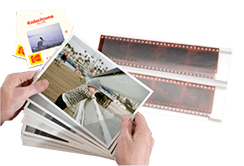
Always. Your developed negatives are cut into strips, sleeved, and mailed back with your order. If you’d rather have the roll left uncut, choose that option at checkout. The empty cassette is recycled after processing.
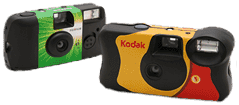
Yes. Disposable cameras hold 35mm film, and any brand is welcome in the same order. Add them as a separate line at checkout and send the whole camera; we take the film out here. See our disposable camera developing page.
Movie film that became 135 film, the world’s standard still format. Part of our guide to popular film formats.
The 35mm film format was developed and produced at an experimental scale in Thomas Edison’s laboratory by splitting 70mm roll film. Edison filed his caveat for the double-perforated cine film in the fall of 1889, describing it as a long band passing from one reel to another, driven by two sprocket wheels.
Cine film was cheap, and unused short ends were soon available for small cameras that were easy to carry compared with the large-format plate cameras of the day. The earliest emulsions were fine-grained and slow, but as studios began filming indoors they demanded faster stock at the expense of grain, which ironically made it less suited to still cameras once those became widely available. The first design was patented as early as 1908, but the 1913 Tourist Multiple is generally accepted as the first commercially available 35mm camera, built for both movie and still photography, soon followed by the Simplex, which could switch between full and half frame. Oskar Barnack built his prototype Ur-Leica in 1913 and patented it, but Ernst Leitz did not put it into production until 1924.
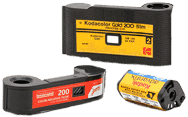
Early 35mm cameras had to be loaded in the dark from bulk film. Kodak changed that in 1934 with the 135 daylight cassette, launched alongside its Retina camera: a light-tight metal canister with a felt-lined slot and a short leader you could thread onto the take-up spool in daylight. The standard 135 frame is 24 x 36mm, twice the size of a cine frame, and cassettes hold enough film for 12, 24 or 36 pictures. From 1983 a DX code on the cassette let cameras read the film speed automatically. The 135 format became by far the most widely used photographic film format until the arrival of the digital camera.

The strip of 135 film is 35mm wide, just under 1.4 inches, with a row of sprocket holes along each edge, eight per frame. The picture area is 24 x 36mm, close to 1 x 1.4 inches, and the frames sit a few millimeters apart along the strip. A 36-exposure roll is about 1.6 meters (5.3 feet) long. Half-frame cameras divide each frame into two 18 x 24mm pictures, and panoramic cameras stretch it to 24 x 65mm. For comparison, a 110 negative is 13 x 17mm, and a 120 medium format frame is 60mm wide.
A half-frame camera splits each 24 x 36mm frame down the middle and shoots two upright 18 x 24mm pictures in its place. A 36-exposure roll becomes 72 photos, which is a big part of why the format has taken off again: the Olympus Pen cameras of the 1960s are back in demand, Kodak’s Ektar H35 made half-frame cheap and simple, and Pentax built its first new film camera in decades, the Pentax 17, around it. The pictures are smaller and a little grainier than full-frame 35mm, in the same way 110 is, and the two-up pairs are a look of their own.
Half-frame rolls take the same developing as any other 35mm film. Scanning is where they differ: there are twice as many pictures on the roll, so we add $6 per roll for half-frame scanning. Choose the half-frame option at checkout and tell us how you want the frames scanned:
Every half-frame is scanned on its own. A 36-exposure roll gives you 72 upright images.
4 pictures, 4 separate files
Each pair is scanned together as one full 35mm frame, side by side. A 36-exposure roll gives you 36 images, each holding two pictures.
4 pictures, 2 paired files
Not sure which to pick? 1-up is the choice if you want each photo on its own for printing and sharing. 2-up keeps the pairs together, which is how many half-frame shooters plan their shots, and gives you the diptych look straight out of the scanner.
The E-6 process is the chromogenic process for developing Kodak Ektachrome, Fujifilm Fujichrome Velvia, Fujifilm Fujichrome Provia, InfraChrome Color Infrared and other color reversal (slide) films. Instead of a negative, you get a positive transparency you can project, mount, or scan. Read more about E-6 film types and attributes.
CineStill 50Daylight and 800Tungsten color negative films bring the story full circle: they are motion-picture stock prepared and packaged for 35mm still cameras, developed in standard C-41. They have a very distinctive look and are meant for very different scenes. 50D is a daylight film with very fine grain, and 800T is tungsten-balanced and performs well in low light. See CineStill 50Daylight and 800Tungsten example images and film attributes.
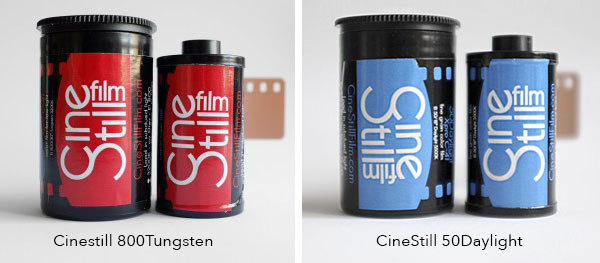
35mm never went away. Kodak, Ilford, Fujifilm, CineStill, Lomography and a long list of smaller brands still make fresh color, black & white and slide film in 135 film cassettes, new cameras like the Kodak Ektar H35 are being made for it, and every disposable camera on a drugstore shelf has a roll of it inside. It remains the most-shot film format in the world, and the one we develop more of than any other.
Sources: Camerapedia, Kodak product histories.
Every format has its own page, with the history and the developing details. Or see the whole guide.







 FAQ