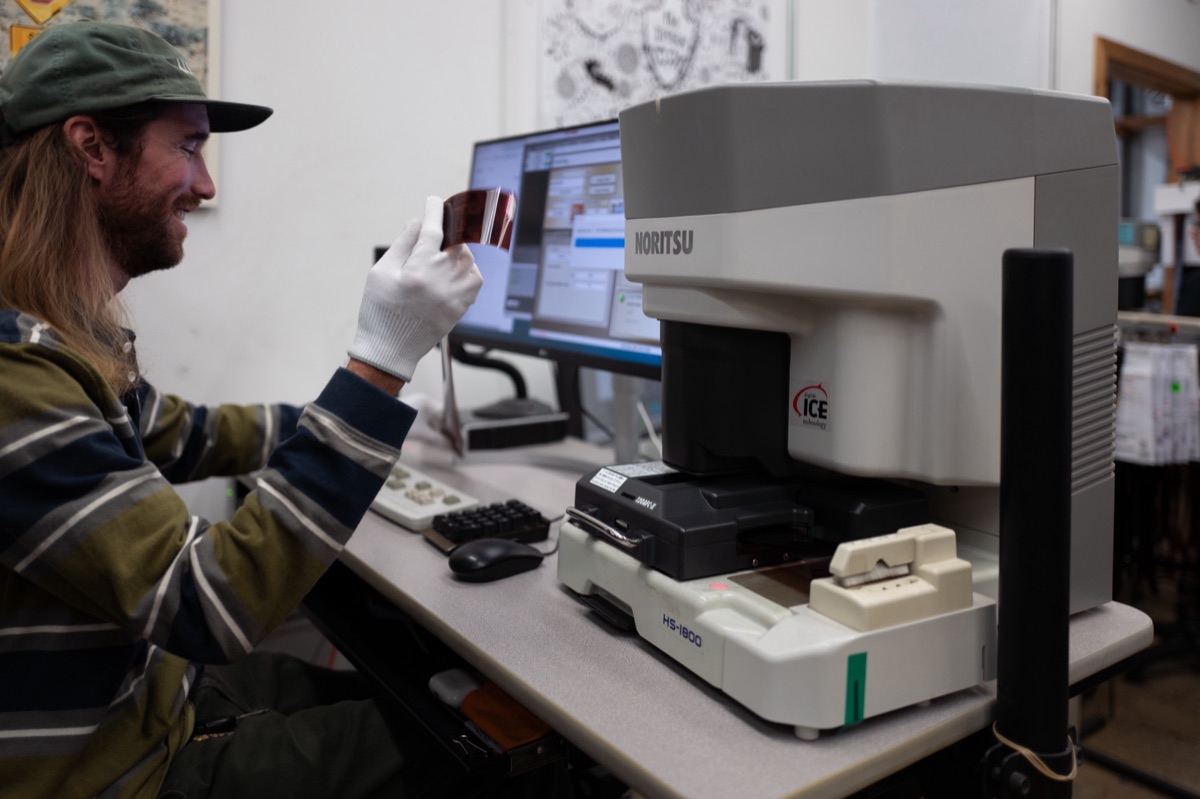
126 film is the Kodak Instamatic cartridge: 35mm-wide film with a square picture, made from 1963 to 2007. Yes, it can still be developed, and we do it in our own lab. Color (C-41), black & white and slide (E-6) cartridges are developed and scanned in-house, uploaded to your free web gallery, and your negatives are mailed back.
Start Your 126 Order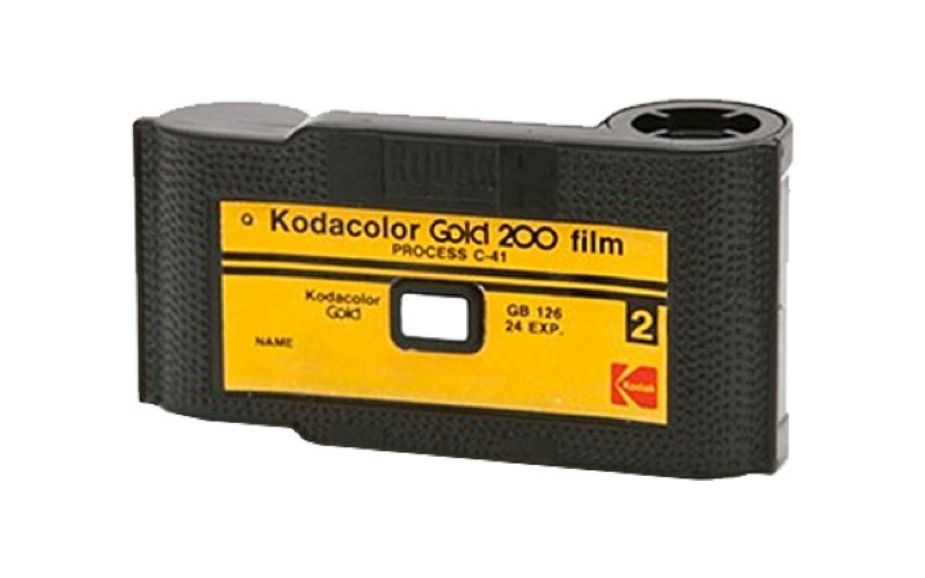 We processC-41 · B&W · E-6
Quality developingSince 1976
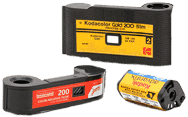
Found a chunky plastic cartridge in an old Instamatic, or loose in a drawer? Here’s how to tell a 126 film cartridge from its cousins.
We have been developing 126 film since the Instamatic was still on store shelves. Here’s what we process, what you get back, and what to check before you mail it.

One price per cartridge, with the add-ons you choose at checkout. No hidden fees.
| Add-ons per cartridge | |
|---|---|
| Enhanced scans Our recommended size | + $2 |
| Super scans Largest files, best for enlargements | + $6 |
| Color 4×6 prints | + $10 per set |
| True black & white 4×6 prints On real silver gelatin paper | + $20 per set |
| Slide film (E-6) | + $6 |
| Push or pull processing | + $3 |
| Do not cut negatives | + $3 |
| Panoramic format Required for a 126 cartridge reloaded with 35mm film, so the sprocket-hole edges are scanned | + $10 |
| Scans on USB drive | + $12 per order |
| Other options | |
| Develop only, no scans $11 base + $6 cartridge film | $17 |
| Inbound shipping Printable label or free postage-paid mailer | Free |
| Return shipping Unlimited rolls per order | $6.95 |
Pick 110 / 126 / Advantix as your film type, choose your scan size and any prints, and check out. One order can hold as many cartridges as you have.
Print your free shipping label, or request a postage-paid mailer and we’ll send one to you. Drop the cartridges in as they are and send it.
We email you the moment your scans land in your online gallery. Share, download, or order prints. Your negatives and any prints follow in the mail.
A search for 126 film developing near you usually ends at a photo counter that mails the film out anyway. Most drugstore and big-box counters no longer accept 126 cartridges at all, and the ones that still take them send the film to a third-party lab, with turnaround measured in weeks and, in many cases, no negatives returned. We develop 126 film in our own lab in California, and your negatives always come back to you.
Yes. Nearly every 126 cartridge we see is decades old, and most of them still hold pictures. Expect some color shift, fading or heavier grain, especially if the film sat somewhere warm. The one exception is color film marked Kodacolor-X or C-22, made before 1973, which used a chemistry no longer available. We can process those cartridges as black & white instead, and the pictures come out.
No new 126 film has been made since Ferrania stopped in 2007. What you can buy today is expired stock on eBay and at camera shows, and it usually works, with the color shifts you would expect. The other route is to reload an empty 126 cartridge with 35mm film in the dark. The sprocket holes will show along the edges of each picture, and the camera’s frame counter won’t engage, but it keeps an Instamatic shooting. We develop both. For a reloaded cartridge, add the $10 panoramic format option at checkout: the sprocket holes run through the picture area, and the panoramic scan captures the full width of each frame, holes and all, instead of cropping to the standard 126 square.
The film itself is the same width, 35mm. The differences are the package and the picture. 35mm film comes in a metal cassette with a leader you thread onto a take-up spool, has sprocket holes along both edges and gives a 24 x 36mm rectangle. 126 film sits in a drop-in plastic cartridge with paper backing, has one registration hole per frame, and gives a square picture about 28 x 28mm. That square is why 126 prints and scans look the way they do.
Both are Kodak drop-in cartridges, and 110 is the pocket-sized sequel. A 126 cartridge is about 3½ inches wide, holds 35mm-wide film and makes a 28 x 28mm square picture. A 110 cartridge is a smaller twin-chamber design about 3 inches wide, holds 16mm film and makes a 13 x 17mm picture, roughly a quarter of the area. Both are developed at the same price here, under the 110 / 126 / Advantix film type.
12, 20 or 24, depending on the cartridge. The label on the back says which. Kodak sold 12 and 20 exposure cartridges at launch and settled on 24 exposures late in the format’s life. If the counter in the camera window never reached the end, the unexposed frames simply come back blank; we develop the whole strip either way.
Yes, if it’s E-6 film, which for 126 means slide film made from the late 1970s on, such as Kodak Ektachrome 64 or Agfachrome. We run E-6 in house; add the slide film option at checkout and your transparencies are scanned and returned unmounted. The older slide films are the exception: we cannot process Kodachrome-X (the Kodachrome process ended in 2010) or Ektachrome-X (the E-4 process, gone since the 1970s) at all.
Cartridge film is opened, handled and scanned individually, so it takes a bit longer than 35mm. Most 110, 126 and APS orders are produced in 7–10 business days after we receive them. For anything current that might affect that, see our lab status page.
Your developed negatives are always returned with your order, cut into strips and sleeved. The plastic 126 cartridge has to be broken open in the dark to get the film out, so it is recycled after processing. If you want your negatives left uncut, choose that option at checkout.
The Instamatic cartridge that shot most of America’s family photos from 1965 to the mid-seventies. Part of our guide to popular film formats.
Kodak launched 126 film in 1963 alongside the Instamatic 100, and it answered a complaint the company had heard for decades: loading a roll film camera was fiddly, and people ruined pictures doing it. The 126 film cartridge fixed that completely. It dropped into the camera one way only, the back closed, and you wound and shot. No leader to thread, no take-up spool to find, and nothing to rewind at the end. Kodak called the cartridge Kodapak, but everyone called it Instamatic film after the cameras.
The idea worked. Around ten million 126 cameras were made by Kodak and other companies in the first few years alone, and more than fifty million Instamatics had been sold by 1970. The cameras were cheap, the cartridge was foolproof, and the square prints with rounded corners that came back from the drugstore are how most American families remember the 1960s and early 1970s. If you have a shoebox of square snapshots from that era, they were almost certainly shot on 126 film.

Inside the cartridge is 35mm-wide film with an opaque paper backing, the same idea as 120 roll film shrunk into a plastic shell. The film is coiled loose in the supply chamber and attached to a captive take-up spool in the other, so there is no supply spool at all. The paper backing is printed with frame numbers that show through a small window in the back of the cartridge, and most cameras have a matching window in the door so you can see the number and the film label without opening anything.
Instead of sprocket holes along both edges, the film has a single registration hole per frame. A sensing pin in the camera drops into that hole when the film has advanced one full frame, which locks the winding lever and sets the shutter. That is why a 126 camera cannot double-expose by accident and why a reloaded cartridge, with ordinary perforated 35mm film inside, needs the pin taped down or the hole counted by hand.
Two more details are easy to miss. The film was pre-exposed at the factory with frame lines and numbers along the edge, meant to make printing and viewing easier. And the top edge of the cartridge has a notch whose position tells the camera the film speed, a feature only the more expensive cameras, such as the Kodak Instamatic Reflex and the Rollei A26, ever read.

The film in a 126 cartridge is 35mm wide, the same stock as the film in a 35mm cassette. The picture is square: the exposed negative is about 28 x 28mm, and the printable area inside the pre-exposed frame lines is 26.5 x 26.5mm, which is the usual explanation of where the number 126 came from. Kodak had used the number before, for a roll film made from 1906 to 1949, and simply reused it. Here is how 126 compares with the formats it is most often confused with:
| Format | Film width | Picture size | Package | Pictures |
|---|---|---|---|---|
| 126 film | 35mm, paper-backed | 28 x 28mm square | Drop-in plastic cartridge | 12, 20 or 24 |
| 35mm (135) film | 35mm, perforated | 24 x 36mm | Metal cassette with leader | 24 or 36 |
| 110 film | 16mm, paper-backed | 13 x 17mm | Twin-chamber plastic cartridge | 12 or 24 |
| APS / Advantix | 24mm, magnetic coating | 16.7 x 30.2mm | Sealed canister, no leader | 15, 25 or 40 |
A 126 negative has about 90 percent of the area of a 35mm frame, so scans and prints from 126 film hold up well, far better than 110. The square shape is the real signature: a 126 picture enlarges to a 4×4 or 5×5 print, and when drugstores printed them on 3½ x 3½ paper with rounded corners, that square look became the look of the era.
Kodak stopped making Instamatic cameras in 1988 and 126 film in 1999. Ferrania in Italy kept its Solaris FG Plus 200 color film in the 126 cartridge until 2007, and that was the last fresh 126 film made anywhere. Nobody has picked it up since, largely because the cartridge is hard to manufacture and the cameras are fixed-focus snapshooters with little appeal to new film shooters. What survives is a large supply of expired cartridges, plenty of working Instamatics, and a small community that reloads empty 126 cartridges with 35mm film in the dark to keep them going.
At the lab, that means most of the 126 film we develop is found film: a forgotten cartridge still inside a Kodak Instamatic from a parent’s or grandparent’s closet, or a few boxes bought at an estate sale and shot for fun. Both come out. Color from the 1970s and 1980s usually shows a warm or magenta shift and softer contrast, and black & white Verichrome Pan holds up remarkably well. Our guide to developing old rolls of film covers what to expect from film this old, and if you’re unsure which process your cartridge needs, mail it in and we’ll read the label.
Sources: Camerapedia, Kodak product histories, Ferrania.
Every format has its own page, with the history and the developing details. Or see the whole guide.








 FAQ