Advantix is the name on most APS film cartridges: the sealed 24mm Advanced Photo System cartridge sold by Kodak as Advantix, by Fujifilm as Nexia, and marked IX240. Cartridges are developed and scanned in-house, uploaded to your free web gallery, and your negatives are mailed back inside the cartridge. Already developed? Send it anyway: we scan, print and upload it for the same price.
Start Your APS Order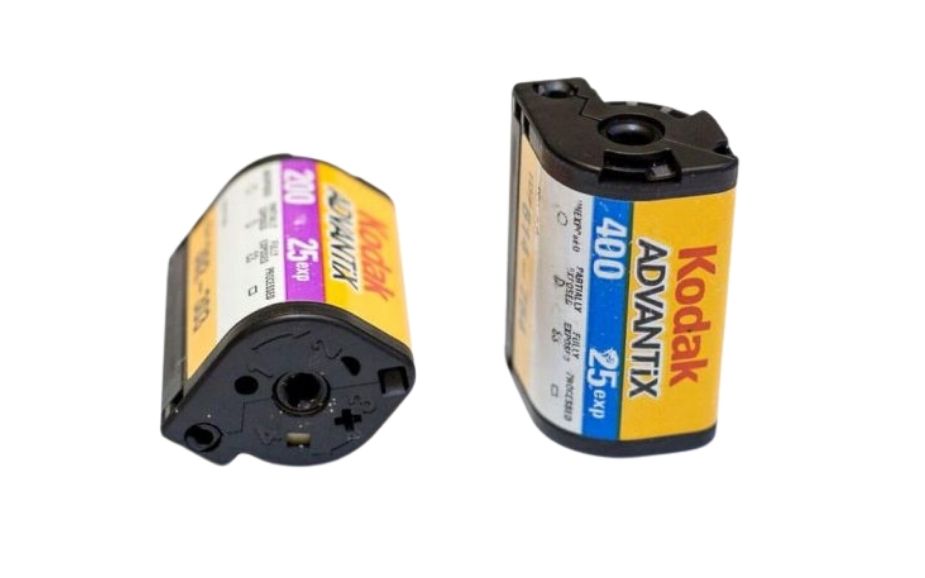 We processC-41 · B&W · E-6
Quality developingSince 1976
Found a stubby plastic cartridge with no film sticking out of it? Here’s how to tell an Advantix / APS film cartridge from its cousins, and whether it has been shot.

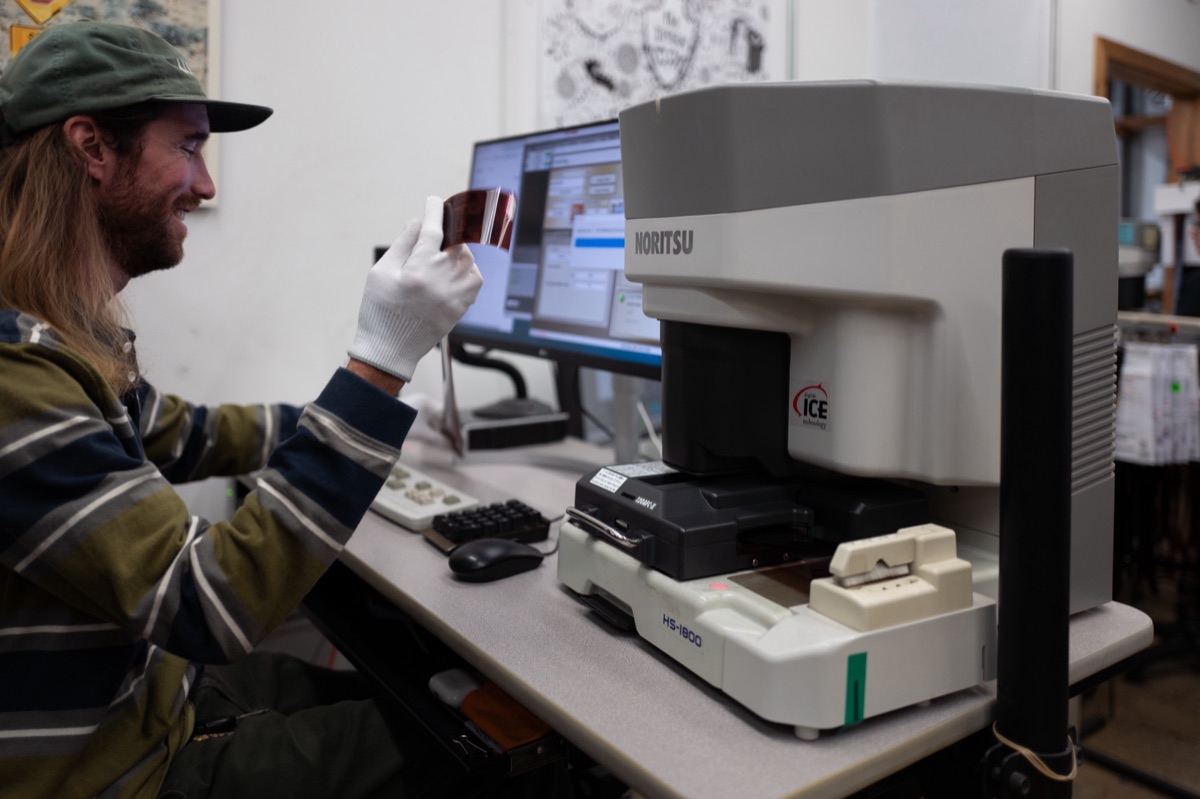
Advantix / APS film needs its own handling: the cartridge is opened by machine, the film is developed, and it goes back into the cartridge. We have the equipment and we still run it every week. Here’s what we process, what you get back, and what to check before you mail it.

One price per cartridge, with the add-ons you choose at checkout. No hidden fees.
| Add-ons per cartridge | |
|---|---|
| Enhanced scans Our recommended size | + $2 |
| Super scans Largest files, best for enlargements | + $6 |
| Color 4×7 prints The one print size for Advantix / APS: the full H frame | + $10 per set |
| True black & white 4×7 prints On real silver gelatin paper | + $20 per set |
| Slide film (E-6) | + $6 |
| Push or pull processing | + $3 |
| Scans on USB drive | + $12 per order |
| Other options | |
| Already developed cartridge Scanned, printed and uploaded for the same price; the negatives stay inside | $20 |
| Develop only, no scans $11 base + $6 cartridge film | $17 |
| Inbound shipping Printable label or free postage-paid mailer | Free |
| Return shipping Unlimited rolls per order | $6.95 |
Pick 110 / 126 / Advantix as your film type, choose your scan size and any prints, and check out. One order can hold as many cartridges as you have, and already developed cartridges go in the same order at the same price.
Print your free shipping label, or request a postage-paid mailer and we’ll send one to you. Drop the cartridges in as they are and send it.
We email you the moment your scans land in your online gallery. Share, download, or order prints. Your negatives and any prints follow in the mail.
A search for Advantix or APS film developing near you usually ends at a photo counter that mails the film out anyway. Most drugstore and big-box counters no longer accept Advantix cartridges at all, because the format needs special equipment to open and reload the cartridge, and the ones that still take them send the film to a third-party lab, with turnaround measured in weeks and, in many cases, no negatives returned. We develop Advantix / APS film in our own lab in California, and your negatives always come back to you.
Yes. Advantix is the name printed on the cartridges Kodak sold, and it is the name most people use when they write to us. APS (Advanced Photo System) is the format behind it. Fujifilm sold the same film as Nexia, Agfa as Futura and Konica as Centuria, and the cartridge itself is designated IX240. They all fit the same cameras and are all developed here under the 110 / 126 / Advantix film type.
Yes. Every Advantix / APS cartridge is expired by now, since the last of it was made in 2011, and we develop them every week. Advantix film is standard C-41 color negative film, so there is no chemistry problem, just age. Expect some color shift, fading or heavier grain, especially if the cartridge sat somewhere warm. Our guide to shooting and developing expired film covers what to expect.
No. Kodak stopped making Advantix film in 2011 and Fujifilm ended Nexia in 2012, and nobody has made Advantix or APS film since. There is no alternative film that fits an APS camera: the cartridge, the 24mm width and the magnetic layer are all unique to the format, and unlike 126 it cannot be reloaded with 35mm film. What you can still buy is expired stock on eBay and at camera shows, which usually works with the color shifts you would expect. We develop all of it.
Look at the four symbols on the end of the cartridge. The one that shows white (or stands proud) is the status: 1, a full circle, means unexposed; 2, a half circle, means partly exposed; 3, an X, means fully exposed and ready to develop; 4, a rectangle, means already processed. Send us anything showing 2, 3 or 4. A cartridge showing 4 already holds developed negatives, stored safely inside, and we scan, print and upload those for the same price; see the next question.
Yes, for the same price as developing. A cartridge showing the rectangle (4) holds developed negatives, sealed safely inside where dust and fingerprints cannot reach them. Order it exactly as you would an undeveloped cartridge, under the 110 / 126 / Advantix film type, and choose your scan size and any prints. We open the cartridge, scan every frame, make 4×7 prints if you ordered them, upload the scans to your online gallery, and return the negatives inside the cartridge. It is the easiest way to get old Advantix pictures off a shelf and onto a screen.
Yes, always. The Advantix / APS cartridge was designed so the developed film goes back into its own cartridge, which protects it from dust, fingerprints and scratches, and that is how we return it, with the status indicator now showing 4. The six-digit ID on the label matches the number printed on the film, so you can always tell which cartridge holds which pictures. To look at the negatives you need an APS viewer or a lab; your scans are the easy way to see and reorder them.
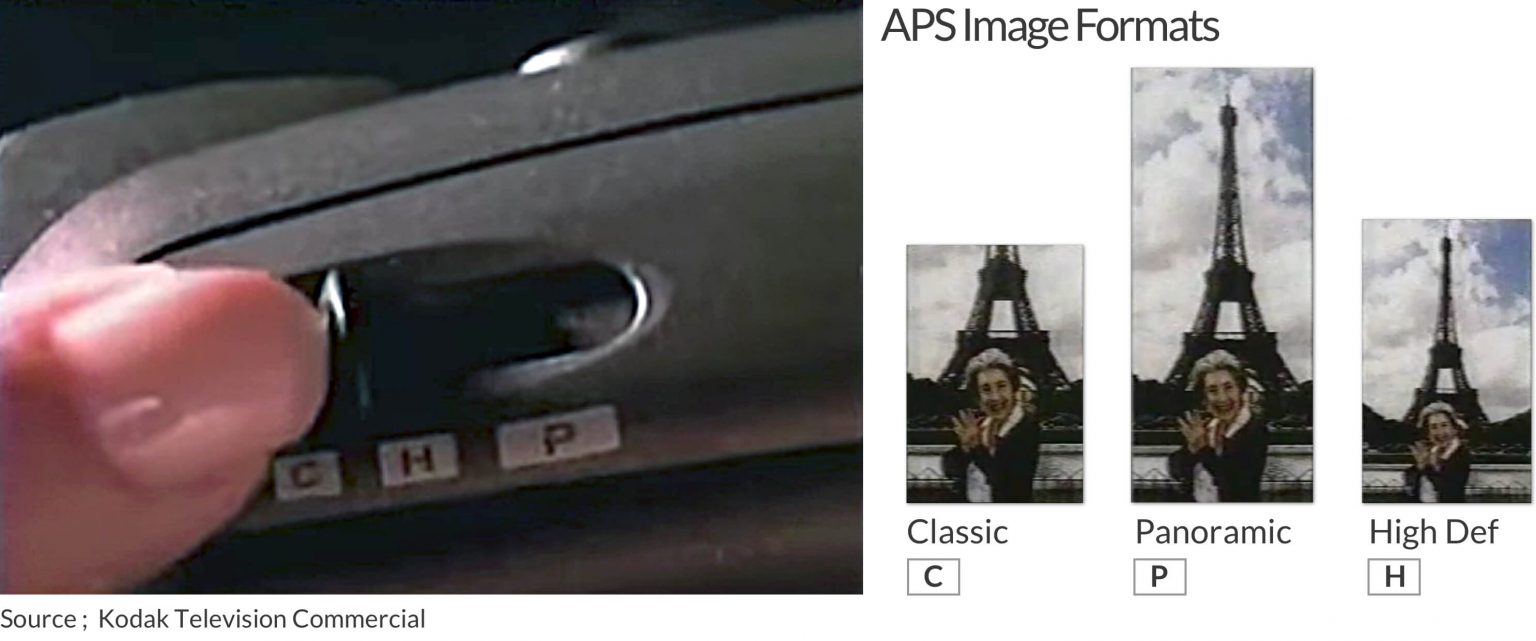
No. An Advantix / APS camera always exposes the full 30.2 x 16.7mm frame; the C, H and P settings only recorded how the print should be cropped. We scan the whole frame, so you get the full picture every time and can crop it yourself. If you order prints, they are 4×7, the full H frame.
Advantix / APS film is 24mm wide with a 30.2 x 16.7mm picture, a bit over half the area of a 35mm frame (24 x 36mm), in a sealed drop-in cartridge instead of a cassette with a leader. APS-C is not a film at all: it is the name of the sensor size in many digital cameras, borrowed from the Classic (C) crop of an APS frame, about 25 x 17mm. If you have an APS-C camera, it takes no film. If you have an APS cartridge, we develop it.
Cartridge film is opened, handled and scanned individually, so it takes a bit longer than 35mm. Most 110, 126 and Advantix / APS orders are produced in 7–10 business days after we receive them. For anything current that might affect that, see our lab status page.
The last new film format, built for the point-and-shoot years just before digital. Part of our guide to popular film formats.
APS film arrived in 1996 as the biggest launch the film industry had attempted in decades. Kodak, Fujifilm, Canon, Minolta and Nikon developed the Advanced Photo System together and released it the same spring, each under its own brand: Kodak called its film and cameras Advantix, Fujifilm used Nexia, and the cartridge itself carried the technical name IX240. The idea was to fix everything people found awkward about 35mm. Loading was fully automatic, there was no leader to thread and no way to open the back on an unfinished roll, and the film came back from the lab sealed inside its own cartridge instead of as loose strips.
The cameras were the real draw. The Canon ELPH, a stainless steel APS camera smaller than a pack of cards, became one of the best-selling cameras of the 1990s, and the ELPH name survives on Canon’s digital compacts today. Kodak sold Advantix cameras by the million, Nikon and Minolta built APS SLRs, and APS disposable cameras appeared on drugstore shelves. For about eight years it was the modern way to shoot film.
Then digital arrived, aimed at exactly the same customers. Kodak stopped making Advantix cameras in 2004 and Advantix film in 2011, Fujifilm discontinued Nexia in 2012, and APS became the first film format killed by digital rather than by a newer film. Most of the cartridges we develop today were shot between 1996 and the mid-2000s and found years later, still sealed, with the pictures intact.
The cartridge is a single-spool plastic shell about 39mm long with a light-proof door over the film slot. Inside is 24mm film, a little under an inch wide, with two perforations per frame instead of the eight on 35mm. The camera opens the door, pushes the film out onto its own take-up spool, and winds it back into the cartridge after every roll, so the film is never exposed to light or fingers outside the camera.
The clever part is a transparent magnetic coating on the film. The camera records the date, the time and the print format you chose on it for every frame, information the lab’s printer could read. That is the IX in IX240: information exchange. Some cameras used it for mid-roll change, letting you pop out a half-shot cartridge, load a different one, and come back later; the camera read the magnetic data to wind straight to the next blank frame.

The four symbols on the end of the cartridge, called visual indicators, show its status at a glance: a full circle for unexposed, a half circle for partly exposed, an X for fully exposed and waiting for the lab, and a rectangle for processed. A tab also locks once the film has been developed, so a camera will refuse a used cartridge. Every cartridge carries a six-digit ID number on its label that is also recorded on the film, which is how a lab, or you, can match a strip of negatives back to the cartridge it lives in.
The feature Kodak advertised most was the format switch on the camera, marked C, H and P. H (High Definition) printed the whole 30.2 x 16.7mm frame as a 4 x 7 inch print. C (Classic) cropped the sides for a 4 x 6, the same shape as a 35mm print. P (Panoramic) cropped the top and bottom for a long 4 x 11.5 inch print. The negative was always exposed in full; the switch only recorded a crop instruction, on the magnetic layer or as small marks beside the frame, that the printing machine followed. That is why we can scan the whole frame no matter which setting you used, and why our prints from Advantix / APS film are 4×7: the full H frame, nothing cropped.
Advantix / APS film is 24mm wide, which is why it is sometimes listed as 24mm film. The full frame is 30.2 x 16.7mm, about 58 percent of the area of a 35mm frame, which is larger than 110 but noticeably smaller than 35mm. A roll came in 15, 25 or 40 exposures. Here is how it compares with the formats it is most often confused with:
| Format | Film width | Picture size | Package | Pictures |
|---|---|---|---|---|
| Advantix / APS film | 24mm, magnetic coating | 30.2 x 16.7mm | Sealed cartridge, no leader | 15, 25 or 40 |
| 35mm (135) film | 35mm, perforated | 24 x 36mm | Metal cassette with leader | 24 or 36 |
| 110 film | 16mm, paper-backed | 13 x 17mm | Twin-chamber plastic cartridge | 12 or 24 |
| 126 film | 35mm, paper-backed | 28 x 28mm square | Drop-in plastic cartridge | 12, 20 or 24 |

The smaller negative is the one real compromise of Advantix / APS film. Our 4×7 prints look fine, and Enhanced or Super scans pull the most out of the frame, but enlargements show grain sooner than 35mm. If your old APS camera still works and you are deciding whether to hunt down expired film for it, that is the trade-off: a camera that is a pleasure to carry, with a negative that is happiest at snapshot sizes.
No Advantix or APS film has been manufactured since 2012, and the cameras cannot take anything else, so the format lives on through expired stock and the cartridges still sitting in drawers. That is the bulk of what we see: a Canon ELPH or Kodak Advantix found in a closet with a half-shot roll inside, a bag of sealed cartridges from the early 2000s, a disposable APS camera from a wedding table. Nearly all of it is C-41 color negative film, so it develops normally, and because the film stayed sealed in its cartridge it is often in better shape than 35mm of the same age. Not sure what you have? Our guide to where to get film developed explains what a lab needs to know, or just mail the cartridge in and we’ll read the label.
Sources: Camerapedia, Kodak and Fujifilm product histories.
Every format has its own page, with the history and the developing details. Or see the whole guide.














 FAQ