


 Gift Cards
 Film Index
 FAQ
FAQ Film Developing
 35mm
35mm 120/220
 Single Use Cameras
 110/126/Advantix
 Sheet Film
 Scan Negs/Slides
 Prints
 Prints from Digital Files
 Enlargements
 Canvas, Metal & More
 Wood Prints
 Desktop Framed Prints
 HD Metal
 Your Account & Albums


How Film Photography Offers a Creative Escape and Why You Might Love It!
Digital photography has been the dominant format for over two decades – and for good reason. It’s fast, efficient, and incredibly convenient. Your iPhone is always in your pocket. Your mirrorless camera shoots video and stills. And for many professionals, digital is the workhorse that gets the job done.
But at The Darkroom, we believe film photography still has something special to offer. Whether you’re a die-hard digital photographer, an iPhone shooter, or someone in a creative slump, film can offer something different: a slower, more intentional, and surprisingly refreshing experience.
This isn’t a “film vs. digital” debate. It’s about showing why you might love both—and why trying film might be exactly the change of pace you didn’t know you needed.
Film Is a Creative Break From the Norm
If you’re used to shooting digital, film can feel like a vacation for your creativity. Digital often feels like work: shooting RAW, importing files, editing, exporting. Film is the opposite—it’s slower, more deliberate, and less screen-driven.
We often compare digital to a Ford F-150—reliable, powerful, made to work. Film, on the other hand, is a stick-shift convertible—maybe a Miata, maybe something older and nostalgic. It’s the car you take out on your day off, just for the joy of driving.
The Handwritten Letter of Photography
A beautiful way to think about it—shared by Hannah Lee—is this: Film is the handwritten letter of photography.
Sure, an email gets the message across. But a letter—physically written, stamped, and sent—feels personal and meaningful. Film is like that. It takes more effort, but the results feel richer and more thoughtful.

What’s the Best Film?
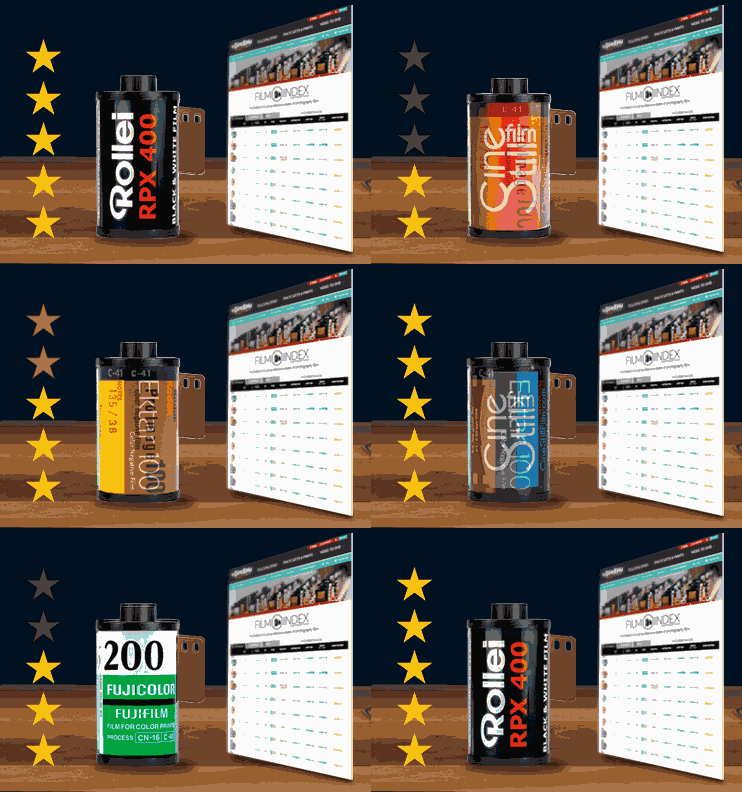
The most comprehensive index of film types; characteristics, examples, and reviews.
It’s All About the Experience
With film, everything from loading your roll to advancing frames adds to the tactile, hands-on nature of photography. You have to think about each shot. You’re not just blasting away and checking the LCD. You’re in the moment.
You don’t take 100 shots to find “the one.” You take 36 or 12. And when you do, you tend to be more connected to your surroundings, the light, the subject—yourself.
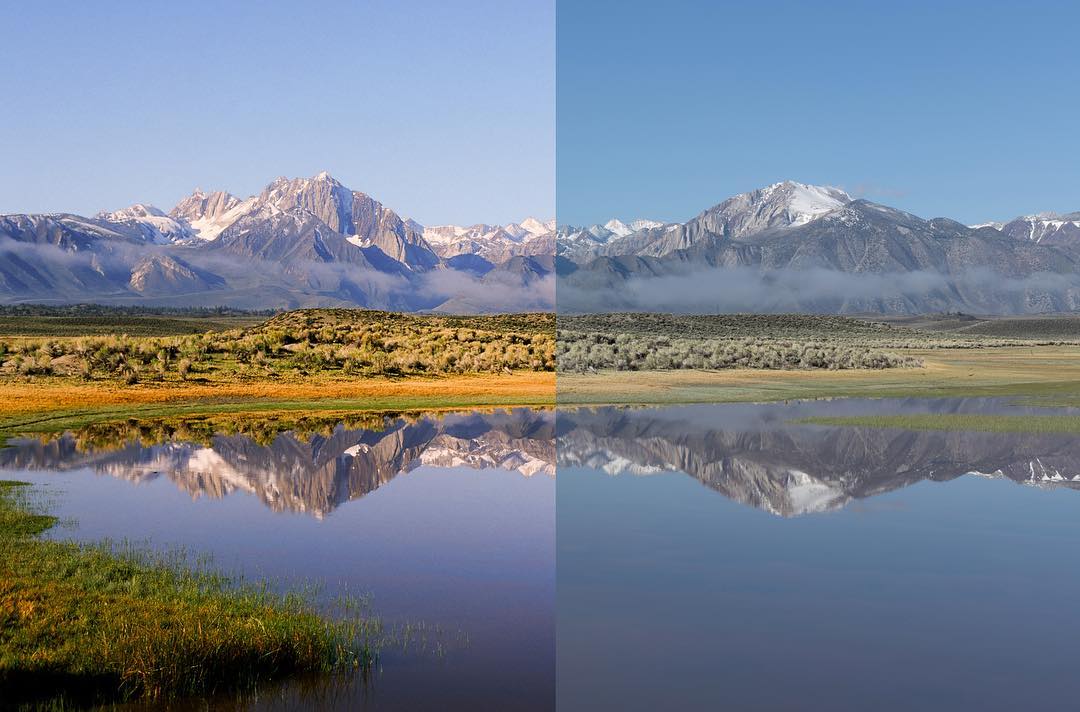
Film Has a Look—and It’s Built-In
One of the biggest differences: with digital, you edit to get a look. With film, you choose the look on the front end.
Each film stock brings its own character:
- Portra 400 – soft tones and flattering skin
- Kodak Ektar – bold colors and fine grain
- Ilford HP5 or Tri-X – gritty, classic black-and-white
- CineStill 800T – dreamy tungsten glow
Once scanned, your film images come back with a baked-in look that requires little to no editing. It’s ideal for people who don’t love the editing process or want to spend less time behind a computer.
Film Improves Your Photography
Shooting film teaches you to slow down and meter light carefully, compose intentionally, and trust your instinctswithout constantly reviewing the back of your camera. You’ll get better at reading light, at making decisions quickly, and at making each frame count.
And when you finally get your scans back—there’s nothing like that anticipation and excitement.
Yes, the Image Quality Is There
Many digital shooters are surprised by just how good film looks.
- 35mm film with a fine-grain stock and good lens can produce incredibly sharp, high-res images. Our Super Scansare equivalent to around 25 megapixels (88MB files).
- Medium format film goes even further—offering true medium format resolution, beautiful depth of field, and a look that rivals even the best full-frame digital systems.
Getting Into Film Is Easier Than You Think
If you’re new to film, there are so many great cameras to get started with:
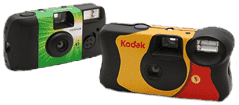
- Disposable cameras – easy, affordable, and fun
- Point-and-shoots – compact, fully automatic, great for everyday moments
- SLRs – like the Canon Elan 7, Canon Rebel, or Nikon F-series (many use your current lenses if you’re a digital DSLR shooter)
- Rangefinders – compact, quiet, and great for street photography
- Medium format cameras – for the highest quality and a slower pace
And if you’re shooting mirrorless digital, many vintage film lenses can be adapted easily. There’s plenty of crossover.
Our Recommendation: Go All In
When you go out to shoot film for the first time, leave your digital camera at home. Commit to it. Bring one or two rolls and a light meter (or just a good eye), and allow yourself to enjoy the process.
Remember: film loves light. Unlike digital, which favors underexposing to protect highlights, film does best when overexposed slightly—especially negative film. Meter for the shadows and let the highlights fall where they may.
Everyday Inspiration
Film doesn’t just make you a better photographer—it makes you want to photograph more. Your street. Your coffee table. The way the morning light hits your kitchen. The small moments you might otherwise overlook.
That’s the real magic.
A Traditional Lab With Modern Convenience
The Darkroom is a traditional dip-and-dunk lab that develops C-41 color, true black and white, and E-6 slide film—all in-house. And we make it easy:
- Free inbound shipping or local drop-off in San Clemente
- Simple online ordering via our website or mobile app (iOS + Android)
- Your scans are uploaded to your own account to view, download, archive, print, and share
We also offer high-res Super Scans, physical prints, and long-term online archiving—so your memories are always accessible.
Final Thoughts: Film Is Worth Trying
This blog isn’t about film being “better” than digital. It’s about film being different—more intentional, more hands-on, more creatively satisfying.
If you’re a digital photographer who’s curious—or even just burnt out—film might be exactly what you need.
Take a break from the norm. Shoot a roll. Slow down. And fall back in love with photography.
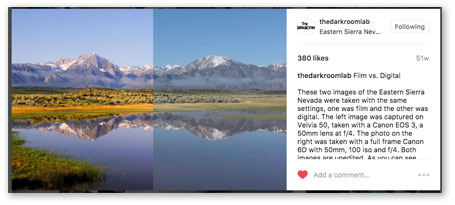 This was originally posted on our Instagram (instagram.com/thedarkroomlab).