








 Gift Cards
 Film Index
 FAQ
FAQ Film Developing
 35mm
35mm 120/220
 Single Use Cameras
 110/126/Advantix
 Sheet Film
 Scan Negs/Slides
 Prints
 Prints from Digital Files
 Enlargements
 Canvas, Metal & More
 Wood Prints
 Desktop Framed Prints
 HD Metal
 Your Account & Albums


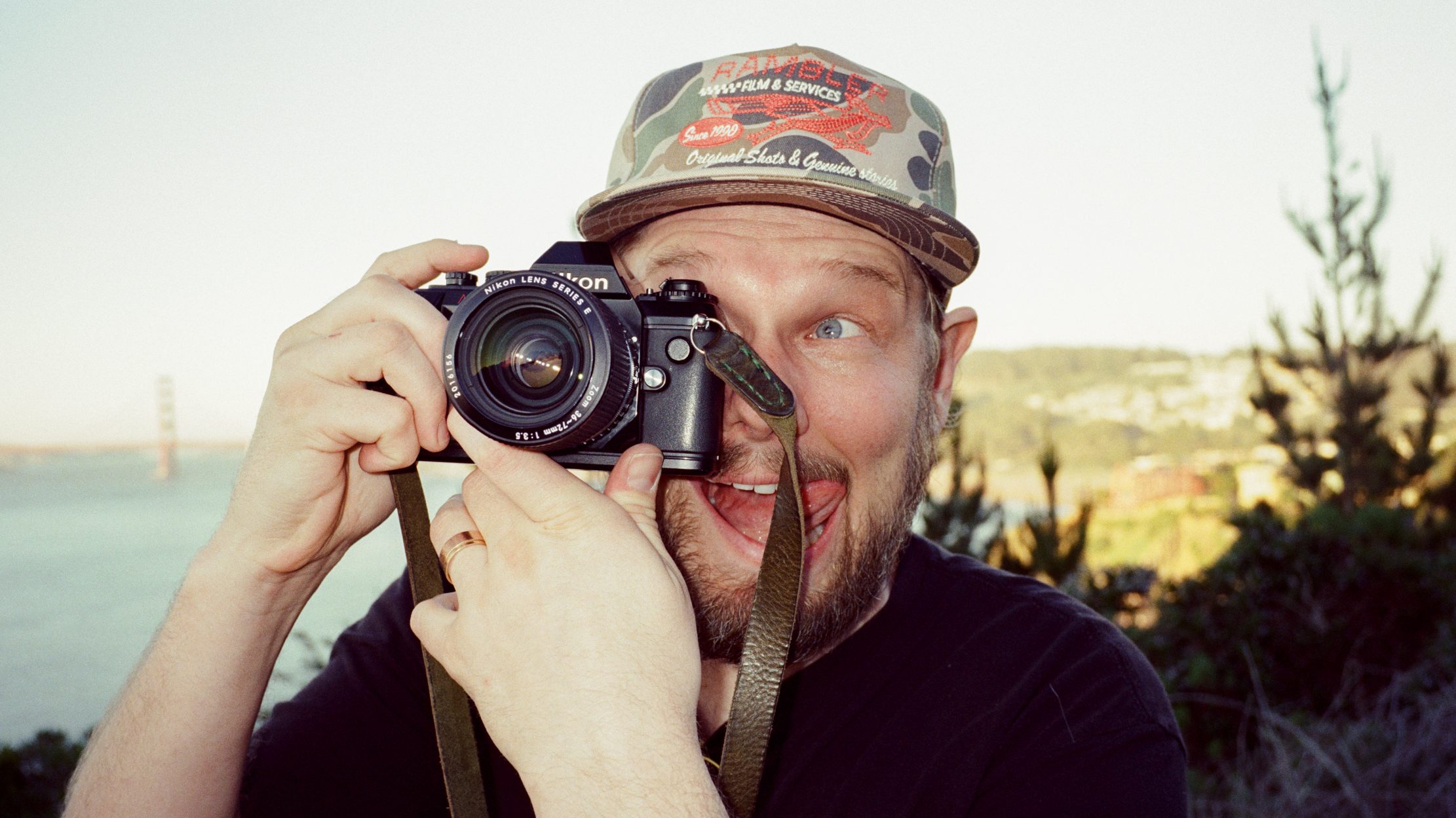
Film photography can feel a little mysterious at first. There’s no screen, no instant preview, and somehow, days later, your photos appear. But underneath that magic is a simple idea: it all comes down to light.
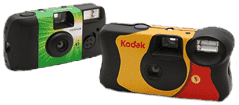
Cameras may look complex, but at their core, they’re surprisingly simple. Whether it’s a disposable camera or a high-end professional model, every film camera follows the same basic concept: it’s a light-tight box with an opening. That opening is the lens, and the lens takes the light from the scene in front of you and projects it onto the film inside the camera. Think of it like a controlled window, where the camera decides how much light comes in and how long it stays there.
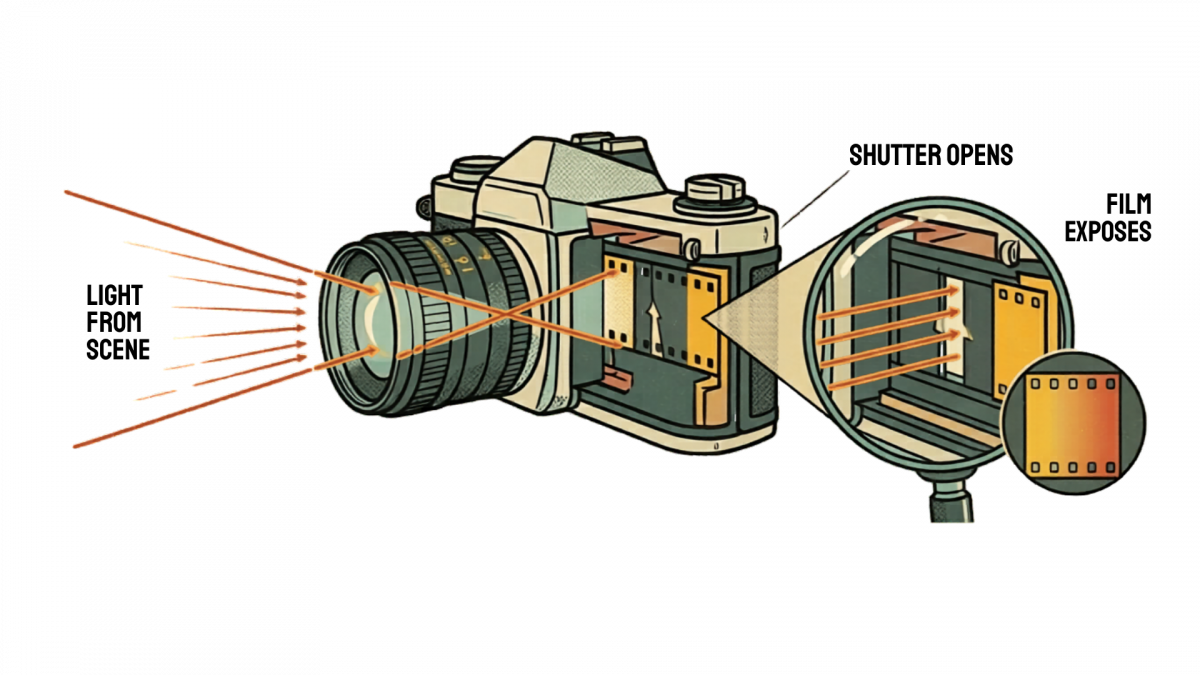
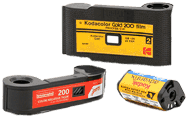
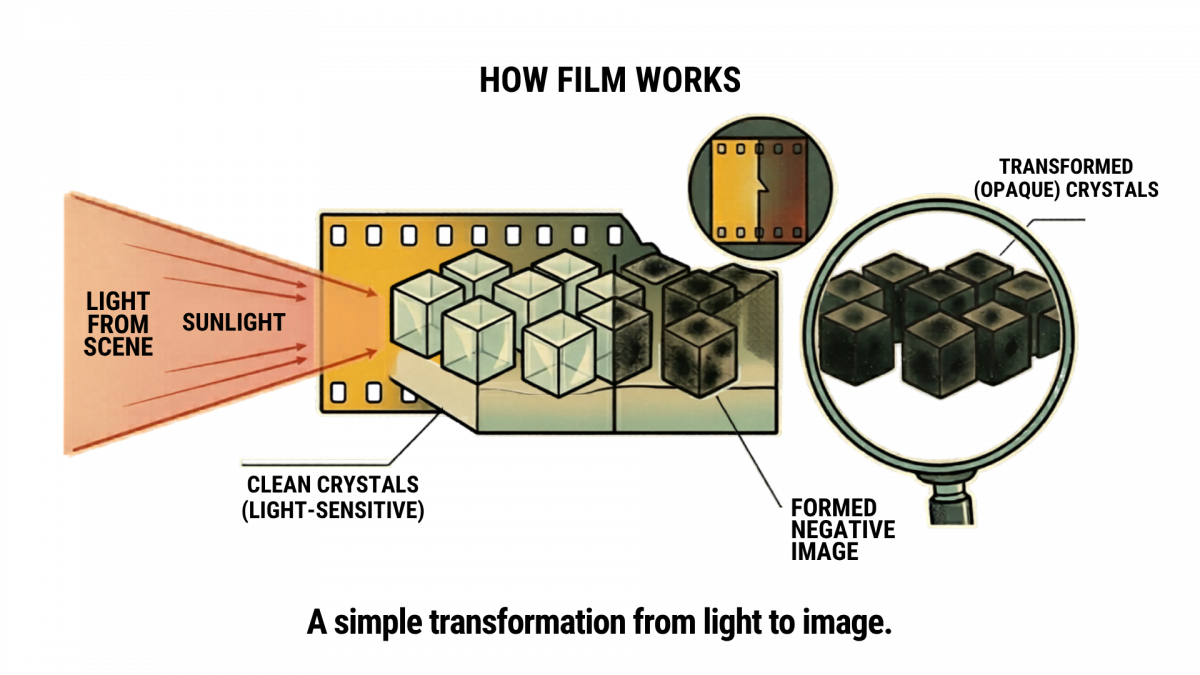
Film itself is coated with a light-sensitive emulsion. It comes protected inside a cartridge (for 35mm) or wrapped in paper backing (for medium format) to keep it safe from light. Once film is exposed to light, it changes, and that’s how an image is created. When you load film into your camera, it stays protected until you take a photo. The moment you press the shutter, light hits the film and forms an image.
Every photo you take is controlled by three key settings, known as the exposure triangle:
- Aperture – how much light enters the lens
- Shutter Speed – how long the light hits the film
- ISO – how sensitive the film is to light
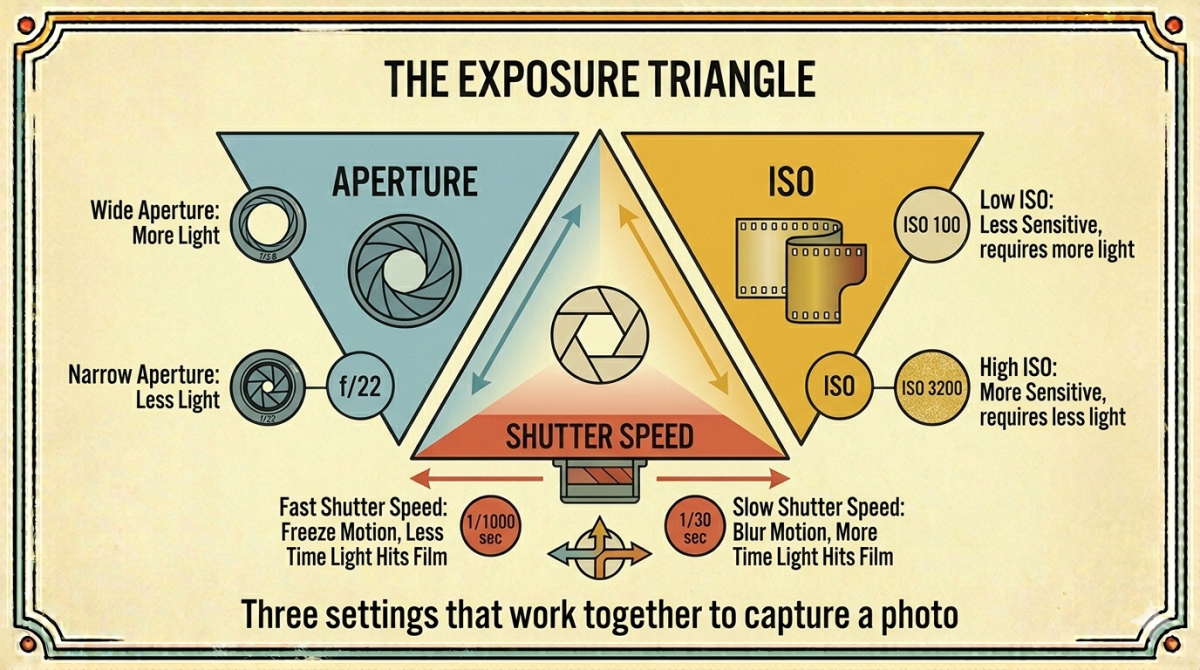
A wider aperture lets in more light, while a faster shutter speed reduces the amount of time light reaches the film. Lower ISO film, like 100, is less sensitive and needs more light, while higher ISO film, like 800 or 3200, is much more sensitive and works better in low-light situations. Some cameras handle this automatically, while others give you full manual control, but the goal is always the same: to properly control the light hitting the film.
As you take photos, each frame of film is exposed one at a time. You advance the film after each shot, and once you reach the end of the roll, it’s rewound back into its cartridge. At that point, your photos already exist, you just can’t see them yet. They’re hidden in the film, waiting to be developed.
Once your film is shot, it’s sent to a lab, where everything happens in complete darkness. The film is removed from its cartridge and goes through a series of chemical steps that bring the image to life:
- Developer brings out the image captured by light
- Stop bath halts the development process
- Fixer makes the image permanent and no longer light-sensitive
- Washing and drying clean and preserve the film
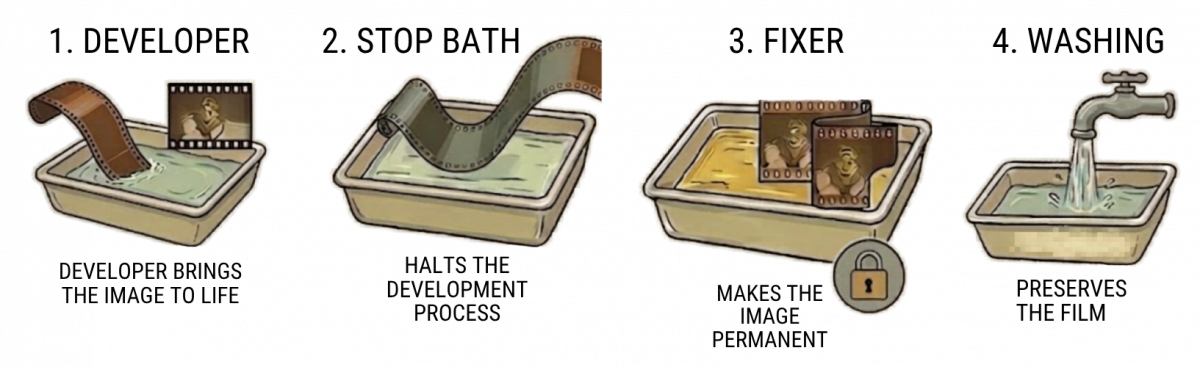
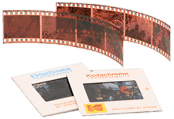
At The Darkroom, this is done using traditional dip-and-dunk processing, which ensures consistent and even results across every roll. After development, you’re left with a physical negative (or a positive if it’s slide film). You can see your photos on the negatives by holding them up to a light source, but they’ll appear inverted and need to be scanned to be easily viewed.
Scanning converts each frame into a digital image. For color negative film, the image is inverted during this process so it appears correctly. Once scanned, your photos can be viewed on your phone or computer, edited, shared, or printed.
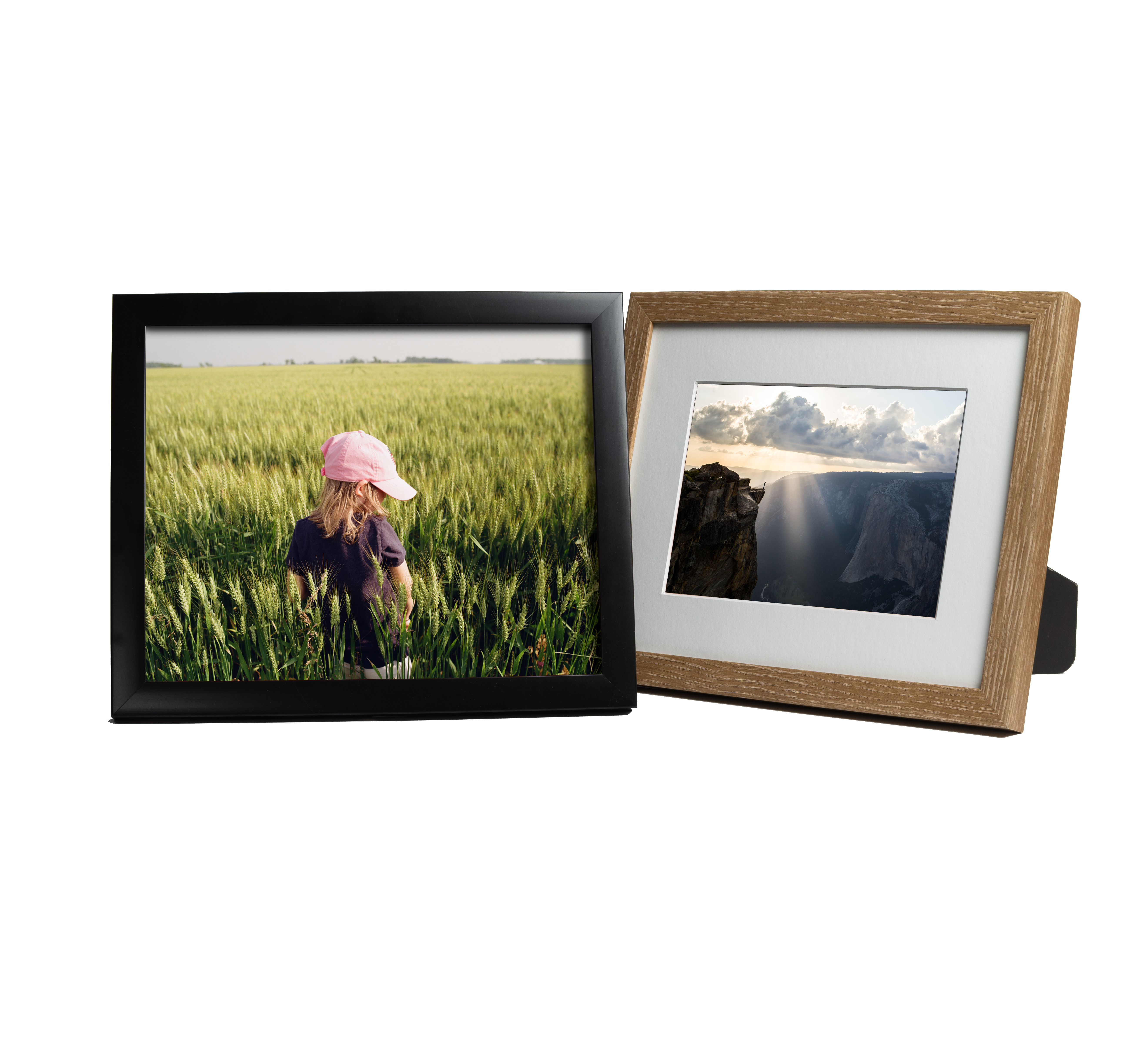
Printing brings the process full circle. At The Darkroom, prints are made on real silver-based photographic paper for both color and black and white. This paper is also light sensitive, just like film. Your image is projected onto the paper, creating a final physical print. In a way, printing is a second exposure, turning your digital file back into something tangible.
Film photography may seem technical at first, but when you break it down, it’s all about light. Light enters the camera, hits the film, creates the image, and eventually brings it back to life in a print. That’s what makes it feel different. There’s intention in every shot, patience in the process, and something real at the end of it all.
That’s the magic of analog photography.
At The Darkroom, we bring that entire process together. As a traditional dip-and-dunk film lab with over 50 years of experience, we combine time-tested development with modern convenience. From easy online ordering to high-end scanning, your images are delivered to your own personal account where you can view, download, edit, share, order prints, and even archive them long-term with our Film Vault. Whether you’re just getting started or have been shooting film for years, the goal stays the same: making the process simple, reliable, and true to the craft.