


 My Account






 Gift Cards
 Film Index
 FAQ
FAQ Film Developing
 35mm
35mm 120/220
 Single Use Cameras
 110/126/Advantix
 Sheet Film
 Scan Negs/Slides
 Prints
 Prints from Digital Files
 Enlargements
 Canvas, Metal & More
 Wood Prints
 Desktop Framed Prints
 HD Metal
 Your Account & Albums


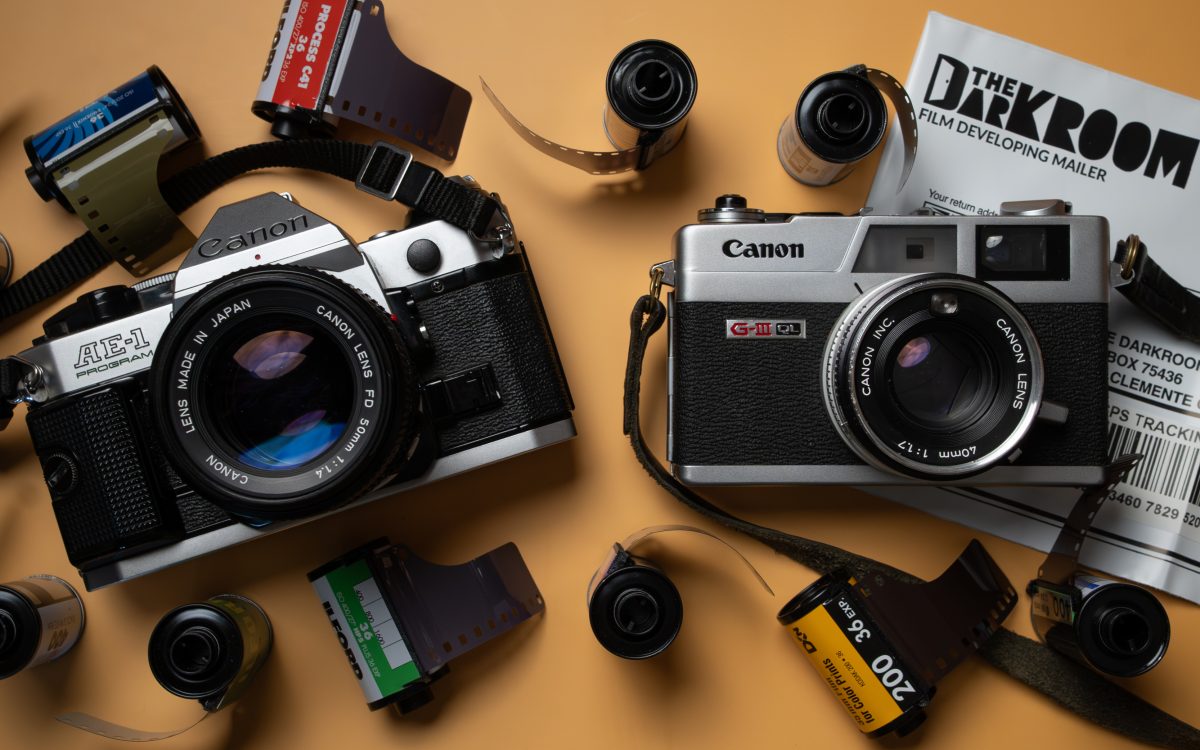
When it comes to 35mm film cameras, the two most popular types are SLRs and rangefinders – and if you’re just getting into film photography, choosing between them can be tricky. SLRs tend to be the go-to for most photographers thanks to their versatility, wide selection of lenses, and variety of affordable options. But rangefinders have their own undeniable charm – compact, quiet, and often sharper than you’d expect.
Typically, we recommend SLRs as the main starting point for most photographers. There are simply far more options available, offering greater versatility in lens choice, shooting experience, and price. From fully manual classics to more advanced autofocus models, SLRs cover a wide range of styles and budgets – often starting around $50 and scaling up to professional-level systems. Rangefinders, on the other hand, don’t offer quite as many options, but their design and shooting experience are truly unique. They can take a bit more time to learn, yet many photographers love the precision, simplicity, and tactile feel they provide.
Ultimately, it comes down to your personal shooting style and preference. If you’re deciding which is best for you, this blog breaks down the pros and cons of each, includes helpful videos, and explores several affordable rangefinder options as well. Here at The Darkroom, we develop and scan thousands of rolls of 35mm film – most of which come from SLRs and rangefinders – so we’ve seen firsthand the great results you can get from both.
Rangefinder Pros:
No Mirror
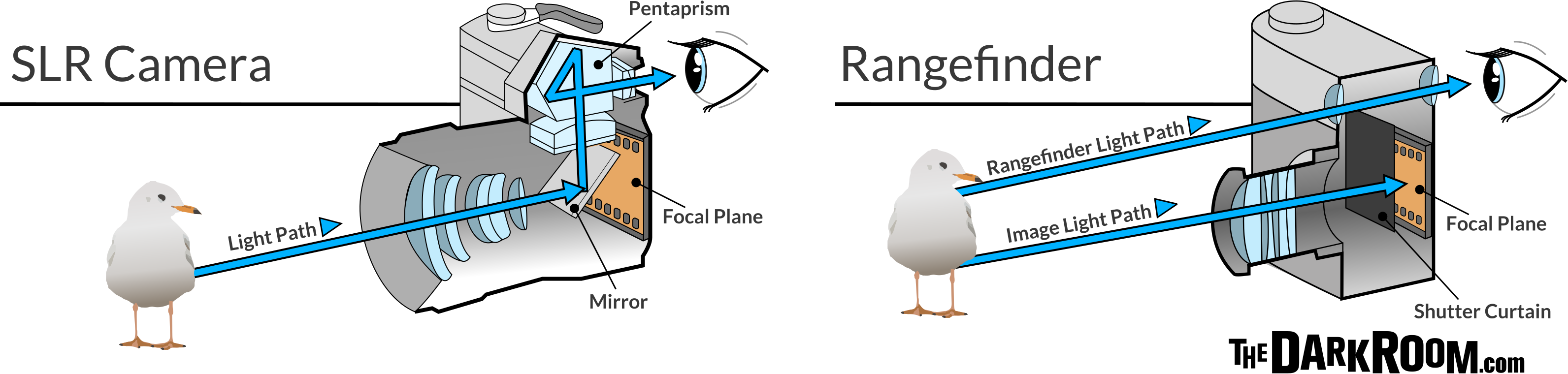
Because rangefinders do not have a mirror, they are commonly more compact and have a quieter shutter. This makes them great for street photography. On top of that, the lens sits closer to the film plane in a rangefinder, often resulting in sharper images. A mirror-less body also means no shutter shake. Now you can shoot handheld at lower shutter speeds and say “sayonara” to your tripod.
Viewfinder
Rangefinders have a larger viewfinder that is separate from the lens which allows a greater field of vision and, in turn, enhances your ability to see your subject enter the frame, helping anticipate your shot.
Rangefinder cons:
Shutter Speed
Rangefinders typically have slower shutter max shutter speeds, like; 1/500 or 1/1000 of a second. This means you can’t open up your aperture as wide/as fast as you’d want in daylight and may not be able to control your depth of field as easily.
Viewfinder
While a rangefinder’s viewfinder is a good thing, it also has some drawbacks. Since you aren’t looking through the lens itself, you are more apt to cover it with your finger, forget your lens cap, etc. The viewfinder also makes a rangefinder not an ideal portrait camera because you aren’t composing or focusing through the lens. Rangefinders are also harder to focus in low light.
- Rangefinders Recommendations: Less common but offer excellent image quality for those who enjoy manual focusing.
- Canon Canonet QL17 GIII
- Minolta Hi-Matic E
- Olympus XA
- Yashica Electro 35 GSN

 What’s the Best Film?
The most comprehensive index of film types; characteristics, examples, and reviews. View Index
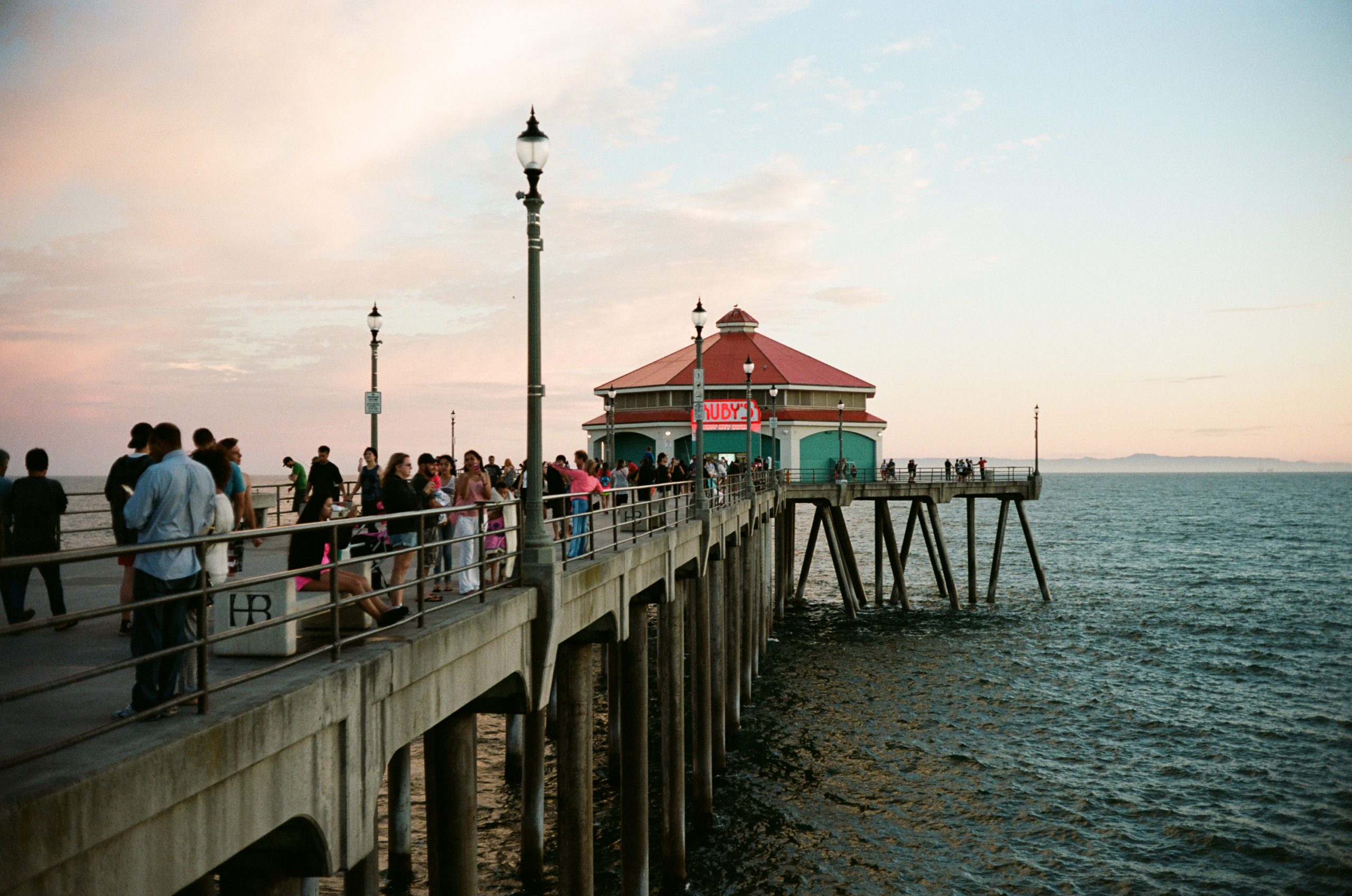
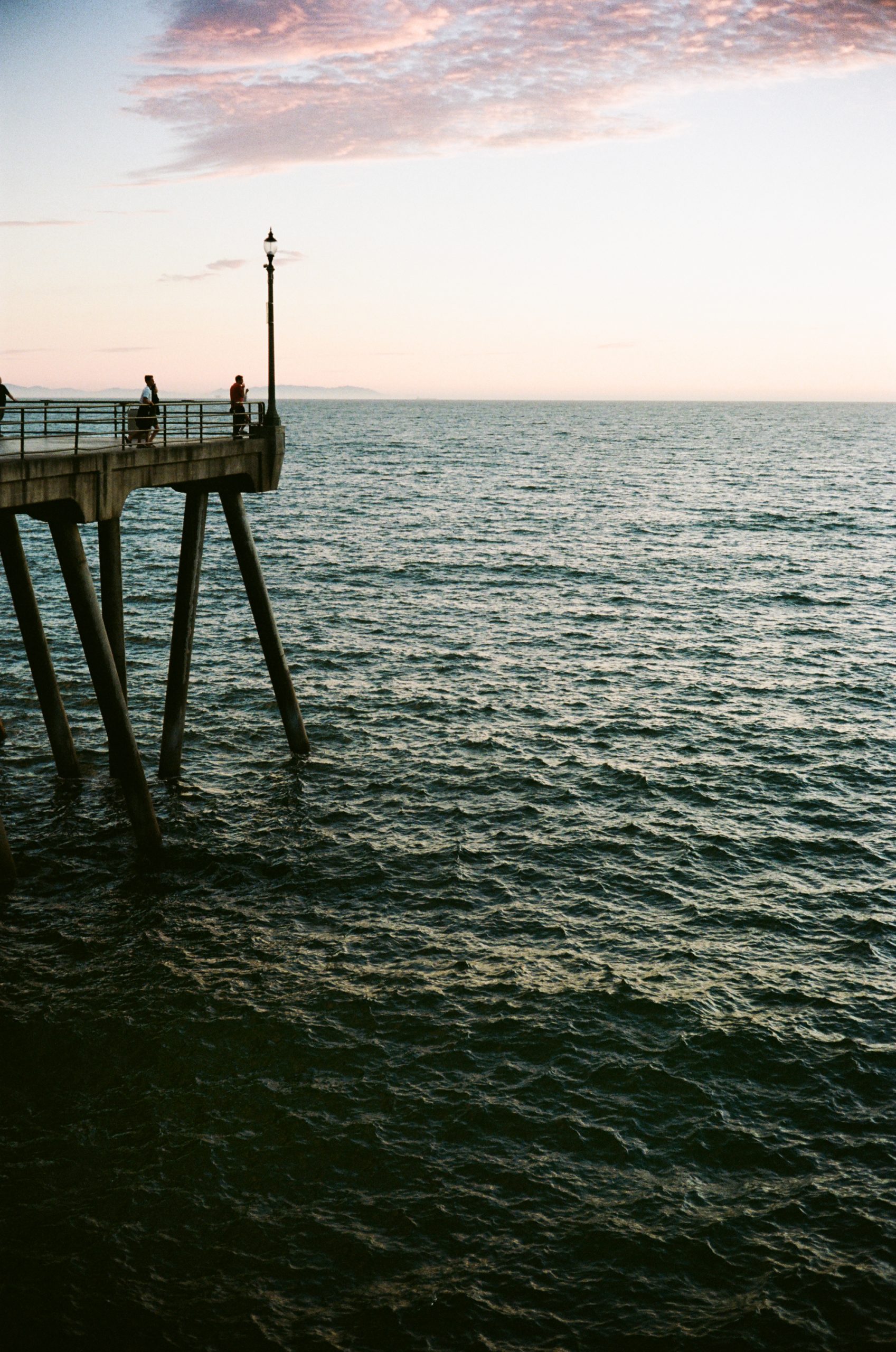
Rangefinder Examples


SLR (Single Lens Reflex)
SLR Pros:
Mirror
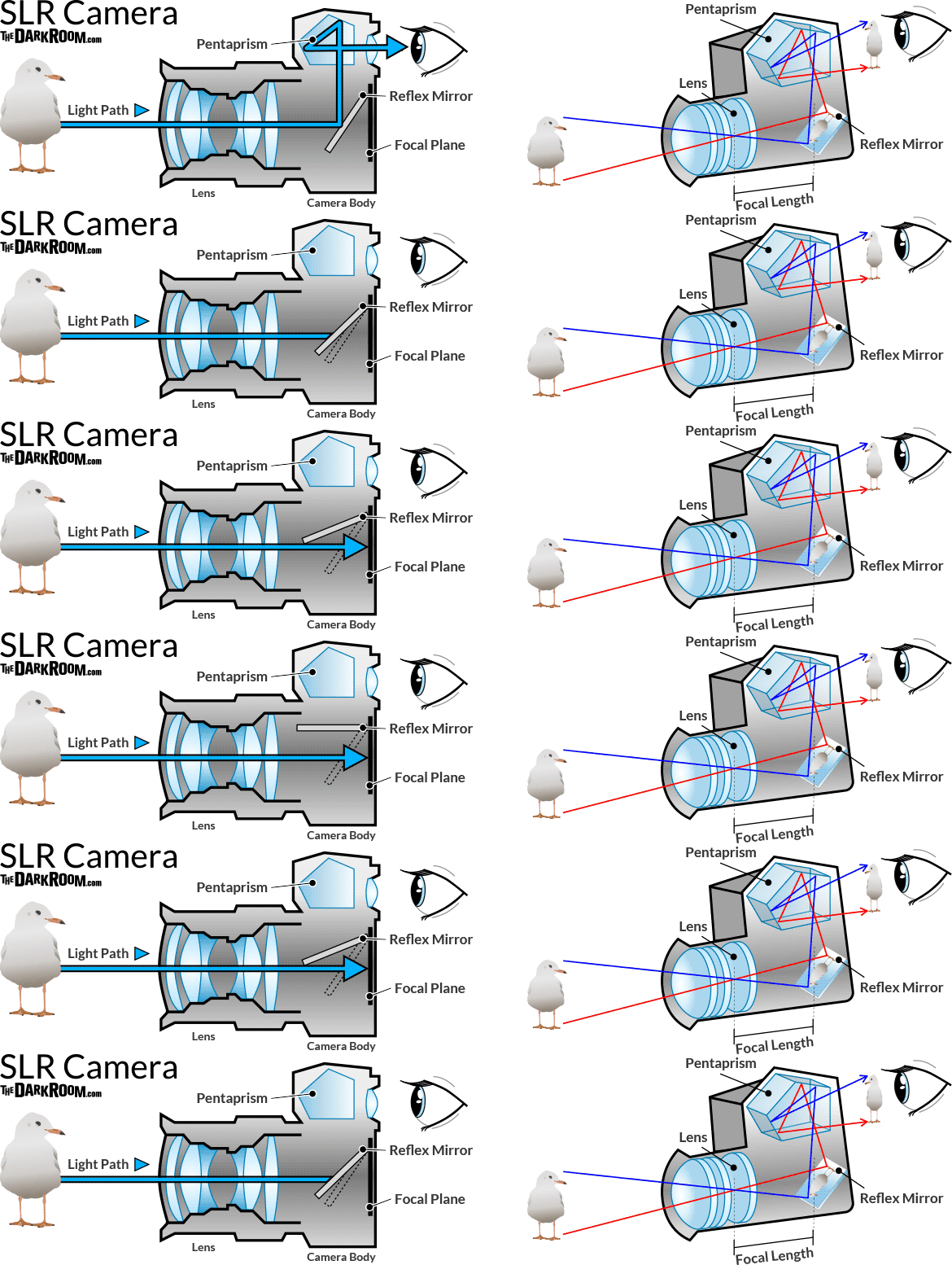
Since SLRs contain a series of mirrors, you see, compose, and focus through the lens. This allows you to preview your depth of field which makes SLRs great for portraits and action photography. With their straightforward split image focusing, what you see is what you get. Additionally, SLRs commonly have faster shutter speeds than most rangefinders, which gives you the ability to stop down and shoot at faster apertures in daylight.
Accessibility
Love them or hate them, SLR cameras simply are more common, more widely made, and have a broad range of affordable, interchangeable lenses.They’re a safe bet for beginners as they are generally easier to learn on, but their incredible versatility also makes them ideal for professional photographers.
SLR Cons:
Mirror
The presence of a mirror does make SLR cameras larger, louder, and heavier than the average rangefinder. And the shutter reflex increases camera shake, which means you might not want to shoot handheld at lower shutter speeds – we recommend a 60th of a second or higher when shooting handheld.
- SLR Recommendations: Great for manual control and interchangeable lenses. Below are some affordable SLR recommendations!
- Nikon FA, FM, & FE.
- Minolta X-700
- Canon Rebel series
- Olympus OM series
- Minolta Maxxum series
SLR Examples



SUMMARY
In the end, it all comes down to preference. If you want a compact travel camera that’s quiet, super sharp, and virtually pocket-sized – a rangefinder may be for you. Or, if you favor a more versatile camera with a wider range of lenses and don’t mind the extra size – an SLR could be your best bet. Both camera systems can produce amazing results and both happen to be a lot of fun to shoot with.
With that in mind, we recommend you try both out if you can. The reality is, there are a lot of affordable, entry-level rangefinders & SLRs out there to choose from. Who’s to say you can’t have one of each?
Now that you know the difference from a Rangefinder, see how the Leica Rangefinder compares to a $200 Canon Canonet.